For Bay Area transit agencies
Every MTC operator already publishes through 511. That makes the Bay Area the easiest region in the country to put gtfs.media to work — and it's the region this platform comes from.
Onboarding starts at 511
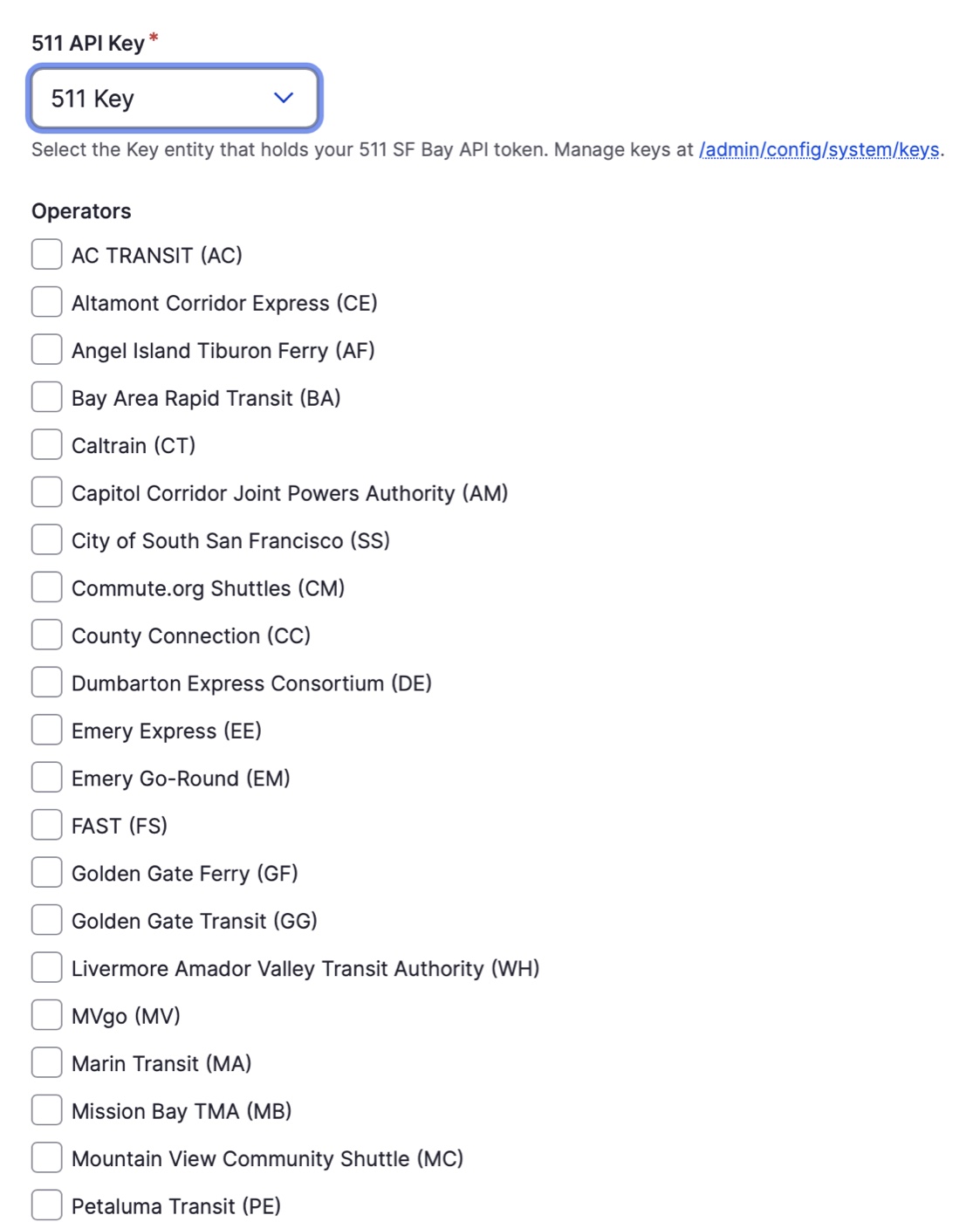
The suite ships a provisioning module for the 511 SF Bay Open Data API (opens in a new tab). Store your 511 token, check your agency in the operator list, and sync: the static feed and all three realtime feeds — trip updates, vehicle positions, service alerts — are provisioned in one pass, from one settings form. Re-running it is safe; the sync is idempotent.
- No feed plumbing — URLs, formats, and refresh cadences come preconfigured for 511
- GTFS+ understood — the
gtfs_plusmodule exists because Bay Area feeds carry GTFS+ files - 511's ID quirks handled — realtime stop IDs that differ from your static feed are reconciled centrally
Nothing new to procure
The data you already publish through 511 is the whole input. Displays, maps, timetables, and the JSON API are generated from it — the feed you already maintain is the only data contract involved, and 511 stays your system of record.
Works with what you run
Your website keeps its stack: the platform installs into a Drupal site or embeds into anything else. Your hosting, or ours. Nothing about how you publish to 511 changes, and nothing you currently operate has to be replaced on day one.
We've worked these feeds before
gtfs.media is built by FivePaths (opens in a new tab), and the suite grew up on Bay Area data. We've worked on GTFS with Sonoma‑Marin Area Rail Transit (SMART), the San Mateo County Transit District (SamTrans), Caltrain, and the SFMTA. The quirks your feed has are quirks we've already met.
Put your feed to work.
You're on 511, so most of the setup already exists. Tell us which operator you are and we'll show you your own data running.